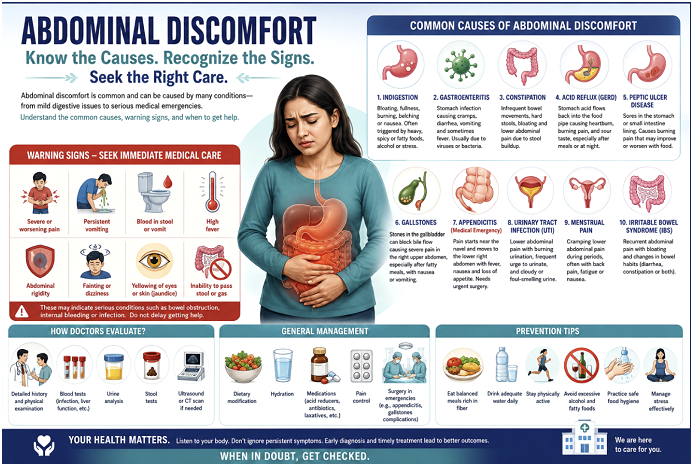
Common Causes of Abdominal Discomfort: A Medical Guide for Patients
Abdominal discomfort is one of the most frequent reasons people seek medical care. It can range from a mild, temporary sensation of bloating to severe pain requiring urgent attention. Because many different organs are located within the abdomen-such as the stomach, intestines, liver, gallbladder, pancreas, kidneys, and reproductive organs-abdominal discomfort can have many possible causes.
This article explains the common causes, warning signs, and when to seek medical care, in clear and medically accurate terms.
What Is Abdominal Discomfort?
Abdominal discomfort refers to any unpleasant sensation in the area between the chest and the pelvis. It may be described as:
⦁ Pain (sharp, crampy, or dull)
⦁ Bloating or fullness
⦁ Burning sensation
⦁ Tightness or pressure
The nature and location of the discomfort often provide important clues about the underlying cause.
Common Causes of Abdominal Discomfort
1. Indigestion (Dyspepsia)
Indigestion is one of the most common causes of upper abdominal discomfort.
Typical features:
⦁ Bloating after meals
⦁ Early satiety (feeling full quickly)
⦁ Burning sensation in the upper abdomen
⦁ Belching or nausea
Common triggers:
⦁ Fatty or spicy foods
⦁ Overeating
⦁ Stress
⦁ Alcohol or caffeine
2. Gastroenteritis (Stomach Infection)
This is inflammation of the stomach and intestines, usually due to infection.
Symptoms:
⦁ Abdominal cramps
⦁ Diarrhea
⦁ Vomiting
⦁ Fever (sometimes)
Causes:
⦁ Viruses (most common)
⦁ Bacteria from contaminated food or water
3. Constipation
Constipation can cause significant abdominal discomfort due to stool buildup.
Symptoms:
⦁ Infrequent bowel movements
⦁ Hard stools
⦁ Bloating
⦁ Lower abdominal pain
Common causes:
⦁ Low fiber intake
⦁ Dehydration
⦁ Sedentary lifestyle
⦁ Certain medications
4. Acid Reflux (GERD)
This occurs when stomach acid flows back into the esophagus.
Symptoms:
⦁ Burning pain in the upper abdomen or chest (heartburn)
⦁ Sour taste in the mouth
⦁ Worse after meals or when lying down
5. Peptic Ulcer Disease
Ulcers are sores in the stomach or upper small intestine lining.
Symptoms:
⦁ Burning or gnawing pain in the upper abdomen
⦁ Pain may improve or worsen with food depending on ulcer location
⦁ Night-time pain in some cases
Risk factors:
⦁ Helicobacter pylori infection
⦁ Long-term use of NSAIDs (e.g., ibuprofen)
6. Gallstones
Gallstones can block bile flow from the gallbladder.
Symptoms:
⦁ Sudden, intense pain in the right upper abdomen
⦁ Pain after fatty meals
⦁ Pain radiating to the back or right shoulder
⦁ Nausea and vomiting
7. Appendicitis (Medical Emergency)
Inflammation of the appendix.
Symptoms:
⦁ Pain starting around the navel, then moving to the lower right abdomen
⦁ Loss of appetite
⦁ Fever
⦁ Nausea and vomiting
This condition requires urgent surgical attention.
8. Urinary Tract Infection (UTI)
UTIs can sometimes cause lower abdominal pain.
Symptoms:
⦁ Burning during urination
⦁ Frequent urge to urinate
⦁ Lower abdominal discomfort
⦁ Cloudy or foul-smelling urine
9. Menstrual-Related Pain (Dysmenorrhea)
In females, abdominal pain may be related to menstruation.
Symptoms:
⦁ Cramping lower abdominal pain during periods
⦁ Back pain
⦁ Nausea or fatigue
10. Irritable Bowel Syndrome (IBS)
A functional bowel disorder with no structural disease.
Symptoms:
⦁ Recurrent abdominal pain
⦁ Bloating
⦁ Alternating diarrhea and constipation
⦁ Relief after passing stool
Warning Signs That Require Urgent Medical Attention
Seek immediate medical care if abdominal discomfort is associated with:
⦁ Severe or worsening pain
⦁ Persistent vomiting
⦁ Blood in stool or vomit
⦁ High fever
⦁ Abdominal rigidity (hard, board-like abdomen)
⦁ Fainting or dizziness
⦁ Yellowing of the eyes or skin (jaundice)
⦁ Inability to pass stool or gas
These may indicate serious conditions such as bowel obstruction, internal bleeding, or infection.
Preventing Abdominal Discomfort
Simple lifestyle measures can reduce risk:
⦁ Eat balanced meals rich in fiber
⦁ Drink adequate water daily
⦁ Avoid excessive alcohol and fatty foods
⦁ Maintain regular physical activity
⦁ Practice safe food hygiene
⦁ Manage stress effectively
Conclusion
Abdominal discomfort is a broad symptom with many possible causes, ranging from mild digestive disturbances to serious surgical conditions. While many cases resolve on their own, persistent, severe, or unusual symptoms should always be evaluated by a healthcare professional.
Early recognition and appropriate medical care significantly improve outcomes and prevent complications